Why Modern Wars are becoming more deadly for women and children…..by Harvinder Kaur
War has never been a uniform experience. It has always carved humanity differently, drawing invisible lines between those who decide it and those who endure it.
Yet in the modern era—where battles unfold not only on distant frontlines but inside densely populated cities, refugee settlements, schools, hospitals, and homes—the nature of suffering has changed in a profoundly disturbing way. Today, it is women and children who carry the deepest, most enduring wounds of war.
In earlier centuries, wars were often geographically contained, fought between armies on defined battlefields. Civilians were affected, yes, but rarely with the intensity and precision seen today.
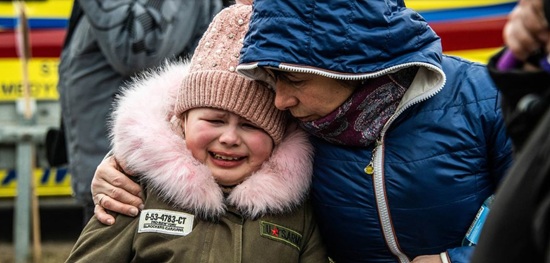
Photo Source: UN Women
Modern warfare, however, has dissolved these boundaries. Cities have become battlefields. Homes have become shelters and targets at the same time.
Hospitals, once symbols of safety, now stand as fragile structures under constant threat. In this transformed landscape, survival itself has become a daily negotiation for millions of women and children.
According to the United Nations, the world is currently experiencing the highest number of active armed conflicts since the end of the Second World War in 1946.
This is not just a statistical rise—it is a reflection of an increasingly unstable global order where violence is more fragmented, prolonged, and deeply embedded within civilian life.
Hundreds of millions of women now live in or near conflict zones where safety can collapse within moments, where a single night can erase entire neighborhoods, and where normal life is no longer a guarantee but a memory.
When conflict erupts, displacement is often the first consequence. Women are among the earliest to be forced out of their homes, carrying with them children, elderly relatives, and whatever belongings they can gather in haste.
Unlike men, who are often drawn into direct combat or political roles in war narratives, women are left to navigate the collapse of civilian life. They lose access to income, education, healthcare, and legal protection almost overnight.
Yet paradoxically, they are also expected to become the emotional and logistical backbone of survival—holding families together in conditions where stability no longer exists.
In Sudan, this crisis has reached an alarming intensity. The ongoing conflict has created a humanitarian catastrophe marked by drone strikes, mass displacement, and the rapid collapse of essential infrastructure.
Entire communities have been uprooted repeatedly, forcing families into temporary shelters that offer neither safety nor dignity.
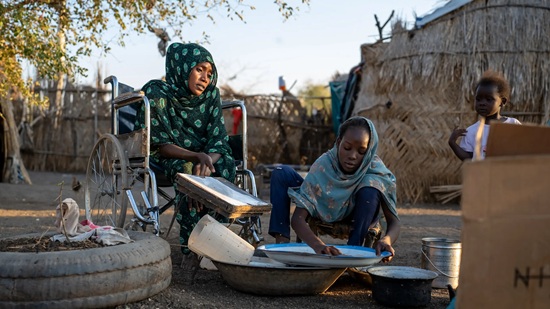
Photo Source: UN Women
For women and girls, even the most basic acts of survival—fetching water, searching for food, or seeking medical help—have become life-threatening journeys.
Reports from humanitarian organizations, including the United Nations, have raised urgent concerns about escalating sexual violence, which is being used to terrorize communities and assert control in areas where law and order have disintegrated.
In Ukraine, the war has created a different but equally devastating pattern of suffering. Beyond the visible destruction of cities and infrastructure, there is a quieter crisis unfolding within displaced families and exhausted communities.
Women have been forced to relocate multiple times, often crossing borders under extreme uncertainty.
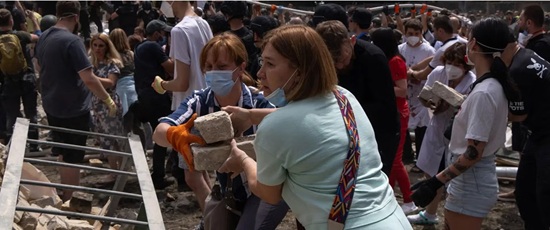
Photo Source: UN Women
Many have lost employment, financial independence, and stable housing.
The psychological toll is immense—children growing up amid air raid sirens, mothers living in constant anticipation of loss, and entire families suspended in a prolonged state of trauma.
Anxiety, depression, and post-traumatic stress have become widespread, reshaping daily life in ways that may take generations to heal.
Afghanistan presents yet another dimension of this global pattern. Here, the restriction of girls’ education has created a crisis that is not immediately explosive but deeply structural.
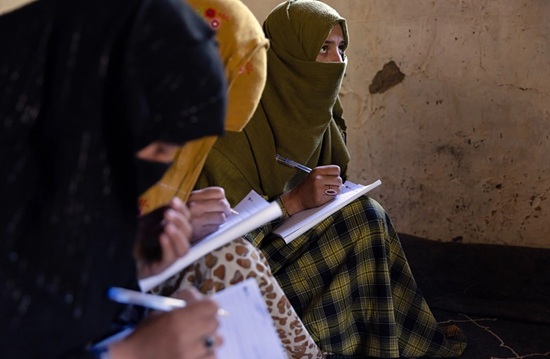
Photo Source: UN Women
Education is not merely the act of learning; it is the foundation of autonomy, safety, and future possibility.
When girls are denied access to schooling, the consequences extend far beyond classrooms. It affects their mobility, their economic independence, their mental well-being, and their place in society.
Over time, it creates a generation whose future is not just uncertain but systematically narrowed. The silence of closed schools becomes a long echo of lost opportunity.
In Gaza, the scale of devastation has reached catastrophic proportions.
Entire residential zones have been reduced to rubble, and civilian infrastructure has collapsed under sustained military operations.
Women and children have been disproportionately affected, often trapped in areas where evacuation is impossible.
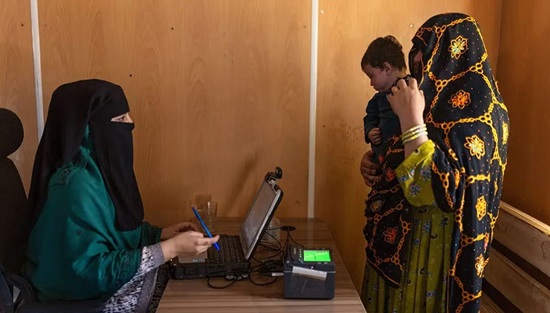
Photo Source: UN Women
Hospitals operate beyond capacity, lacking electricity, medicines, and basic surgical supplies. In the midst of this devastation, stories of survival emerge like fragments of a broken world.
One young survivor, Mona, recounted how a single airstrike took away her mother and siblings in an instant, leaving her to confront a reality stripped of her entire family. Such stories are not isolated—they reflect a wider humanitarian collapse where childhood itself is being rewritten in terms of loss.
Across conflict zones, sexual violence has increasingly been documented not as an accidental byproduct of war, but as a deliberate tactic. It is used to fracture communities, instill fear, and destroy social cohesion from within.
Women become targets not only because of vulnerability, but because of what their suffering represents within the social fabric.
Yet despite its widespread occurrence, much of this violence remains unreported. Fear of retaliation, social stigma, lack of legal systems, and psychological trauma all contribute to a silence that deepens the invisibility of survivors.
The destruction of healthcare systems further intensifies this crisis. In many war-affected regions, hospitals are deliberately or incidentally damaged, medical staff are displaced or killed, and supply chains for essential medicines are broken.
Pregnant women are among the most vulnerable in such conditions, often forced to give birth without trained assistance, sterile environments, or emergency care. What would normally be manageable medical situations become life-threatening emergencies.
At the same time, malnutrition, contaminated water, and lack of sanitation create secondary health crises that disproportionately affect mothers and children.
Economically, war reshapes gendered vulnerability in profound ways. Women, particularly those in informal employment or caregiving roles, are often the first to lose income when conflict disrupts local economies.
With schools closed and social services weakened, unpaid domestic labor increases significantly, leaving little opportunity for recovery or financial independence.
Even after active conflict subsides, re-entry into the workforce remains difficult due to damaged infrastructure, ongoing insecurity, and long-term social disruption.
Yet, within this overwhelming landscape of suffering, it is equally important to recognize that women are not only passive victims of war. Across conflict zones, they are active agents of survival and reconstruction.
They organize food distribution networks, provide psychological and community support, care for displaced families, and often step into leadership roles when traditional systems collapse. In many cases, they become the invisible infrastructure that holds fragmented societies together.
Research from multiple post-conflict studies has shown that peace agreements are significantly more durable when women are included in negotiation and decision-making processes.
Their participation tends to prioritize long-term stability, community rehabilitation, and social cohesion.
Despite this evidence, their representation in formal peace talks remains disproportionately low across the world, reflecting a persistent gap between lived reality and political recognition.
Ultimately, modern warfare reveals a painful truth: war does not distribute suffering equally, and it never has. But in today’s interconnected and densely populated world, its inequalities have become sharper, more visible, and more devastating.
Women and children, who are least responsible for the initiation of conflict, continue to bear its heaviest consequences.
Until their voices are fully integrated into systems of peacebuilding, governance, and global decision-making, war will remain not only a political failure but a human one—repeatedly inflicting its deepest wounds on those who had no part in choosing it.
May 23, 2026
-

-
Harvinder Kaur, Journalist, Babushahi Network
sneh.harvi@gmail.com
Disclaimer : The opinions expressed within this article are the personal opinions of the writer/author. The facts and opinions appearing in the article do not reflect the views of Babushahi.com or Tirchhi Nazar Media. Babushahi.com or Tirchhi Nazar Media does not assume any responsibility or liability for the same.