The Care Economy: The Invisible Engine That Keeps the World Running—At Women's Expense….by Harvinder Kaur
Every morning, before the first train leaves the station, before offices buzz with meetings and before markets open for business, another economy has already begun operating.
Breakfast is prepared. School uniforms are ironed. Children are woken up and dressed. Elderly parents receive their medicines. Lunch boxes are packed. Household budgets are mentally recalculated. Doctors' appointments are remembered.
Groceries are reordered before they run out. Someone checks whether the electricity bill has been paid. Someone remembers the parent-teacher meeting next Friday.
None of this work appears on a salary slip.
Yet without it, the formal economy would struggle to function.
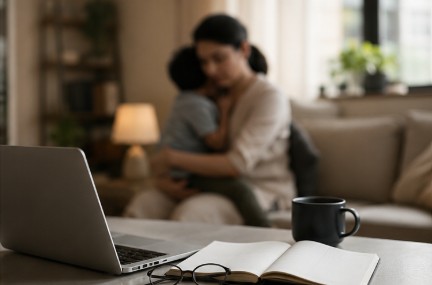
Economists call this the care economy—the vast system of paid and unpaid work that sustains people before they enter the workforce, while they participate in it, and long after they retire. It includes raising children, caring for ageing parents, supporting persons with disabilities, cooking, cleaning, managing households and performing the invisible mental labour that keeps families functioning.
For decades, this work has remained largely invisible in economic policy. It contributes little to Gross Domestic Product (GDP) because much of it is unpaid. But its absence would bring households, workplaces and even national economies to a standstill.
The problem is not that care work exists. Every society depends on it.
The problem is that it is overwhelmingly performed by women.
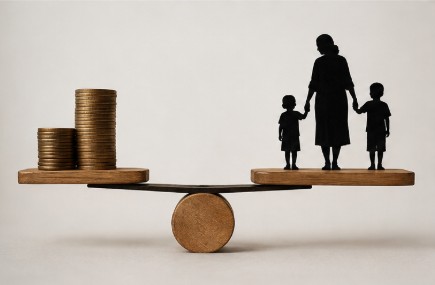
According to the International Labour Organization (ILO), women perform nearly 76 per cent of all unpaid care work globally, spending more than three times as many hours on caregiving as men. In India, the imbalance is even sharper. The National Statistical Office's Time Use Survey found that women spend nearly five hours every day on unpaid domestic services, while men devote less than an hour on average.
These numbers represent far more than household chores. They reflect a hidden subsidy that women provide to economies every single day.
This invisible contribution has real economic consequences.
When women spend hours caring for children, elderly relatives or managing domestic responsibilities, those are hours unavailable for paid employment, skill development, entrepreneurship or leisure. Many reduce their working hours, decline promotions or leave the workforce altogether because the demands of unpaid care become impossible to balance with professional responsibilities.
This is one reason India continues to struggle with relatively low female labour-force participation despite improvements in girls' education and higher educational attainment among women.
Yet discussions around economic growth rarely acknowledge care as economic infrastructure.
Roads receive budgets.
Power plants receive investment.
Digital connectivity receives policy attention.
Care, despite enabling all of these sectors, continues to be treated as a private family matter.
Economists increasingly argue that this approach is outdated.
The World Bank, UN Women and the Organisation for Economic Co-operation and Development (OECD) have repeatedly highlighted that reducing and redistributing unpaid care work is essential not only for gender equality but also for sustainable economic growth. Expanding affordable childcare, eldercare services and family-friendly workplace policies allows more women to participate in the labour market, increases household incomes and strengthens national productivity.
Beyond economics lies another cost—one that is far less visible.
Researchers increasingly distinguish between physical household work and what psychologists describe as the mental load. It is the invisible responsibility of remembering birthdays, scheduling vaccinations, monitoring school deadlines, anticipating household needs, coordinating family logistics and constantly planning for everyone else's well-being.
Unlike washing dishes or cooking dinner, mental load has no finishing point. It follows women into offices, meetings and even their sleep.
This constant cognitive labour contributes to chronic stress, emotional exhaustion and burnout. Studies have linked unequal caregiving responsibilities with higher levels of anxiety, depression and workplace fatigue among women. Burnout, therefore, is not merely an individual health issue; it is often the outcome of an unequal distribution of care responsibilities.
The consequences extend beyond individual households.
As populations age and birth rates decline across many countries, demand for care is rising rapidly. At the same time, shrinking family sizes and increasing urbanisation mean there are fewer unpaid caregivers available.
Economists warn that unless governments invest in the care economy through childcare services, eldercare systems, paid parental leave and flexible work arrangements, the burden on women will continue to intensify.
Some countries have already begun recognising care as a public investment rather than a private obligation. Nordic nations have expanded paid parental leave, affordable childcare and incentives for fathers to participate in caregiving. These policies have helped narrow gender gaps in employment while improving child welfare and family well-being.
India has also introduced initiatives such as maternity benefits, crèche schemes and programmes aimed at improving childcare. However, experts argue that much more remains to be done, particularly in expanding accessible childcare infrastructure, recognising unpaid care work in policymaking and encouraging a more equal sharing of domestic responsibilities within households.
The care economy is often described as invisible because it rarely appears in national accounts.
But invisibility should never be mistaken for insignificance.
Every meal prepared before dawn, every child cared for after school, every elderly parent comforted through illness and every household quietly held together represents work that sustains the broader economy.
The question is no longer whether care has economic value. It unquestionably does.
The real question is whether societies are finally prepared to recognise that value—not simply in speeches or policy documents, but through investments, workplace reforms and a more equitable sharing of responsibilities at home.
Because until care becomes everyone's responsibility rather than primarily women's work, the world's most essential economy will continue to run on invisible labour—and women will continue paying its highest price.
June 28, 2026
-

-
Harvinder Kaur, Journalist, Babushahi Network
sneh.harvi@gmail.com
Disclaimer : The opinions expressed within this article are the personal opinions of the writer/author. The facts and opinions appearing in the article do not reflect the views of Babushahi.com or Tirchhi Nazar Media. Babushahi.com or Tirchhi Nazar Media does not assume any responsibility or liability for the same.