Raja Warring has lost the post, not his political relevance….by GPS Mann
Amarinder Singh Raja Warring is going through a difficult phase in his political career, but his political battle is far from over. He has lost the post of Punjab Congress president, but he has not necessarily lost his team, supporters, party workers, political ambitions or determination to fight. Those who joined hands to remove him from the post should not make the mistake of assuming that his political journey has come to an end.
Removing someone from a position is one thing; pushing that person out of politics altogether is quite another.
After Pargat Singh was appointed Punjab Congress president on October 2, Warring congratulated him, attended his installation ceremony on October 11 and assured him of his support. The leadership change followed months of differences within the state unit ahead of the 2027 Assembly elections.
The day after Pargat took charge, Warring was seen alongside Rahul Gandhi during the Congress protest in Delhi. He has not entirely concealed his disappointment. At the installation ceremony, he remarked that Sachin Pilot might deny him a ticket next time. Yet he reiterated his loyalty to Rahul Gandhi and the Congress, accepted the party’s decision and continued to participate in its activities.
His frustration was evident, but so was his willingness to remain with the party. That deserves recognition.
The bigger question is why Warring was removed in the first place. Was it because he sometimes spoke without sufficient restraint? Was he unable to bring senior leaders together? Or did his proposals for the 2027 Assembly elections begin to challenge established political interests within the party?
Much of the answer may lie in the contentious question of election tickets.
On February 20, 2025, Warring spoke about giving 60 to 70 new faces an opportunity in the next Assembly elections. For a state with 117 Assembly constituencies, this was an ambitious proposal. It offered hope to younger workers who wanted to advance within the party, but it also meant that established aspirants could no longer take their candidatures for granted.
The debate became sharper in August 2026, when Warring advocated the principle of “one family, one ticket”. He questioned leaders who wanted one Assembly ticket for themselves and another for their sons. Citing the Congress’s Udaipur Declaration, he also referred to Rahul Gandhi’s earlier support for the principle.
Warring was publicly advocating what he considered to be consistent with the party leadership’s stated thinking.
However, at an event in Isru on August 15, a senior leader reportedly argued that a family capable of winning elections could be given even four tickets. Several other senior leaders were present. Warring was not among those on the stage, and his name did not appear on the banner.
The disagreement brought fundamental questions into the open. Who would decide the candidates? How much space would established political families retain? And what opportunities would be available to ordinary party workers?
On August 4, during his public outreach campaign in Ferozepur, Warring had also proposed that 70 per cent of tickets be given to young people. Whether such a high proportion would be practical is open to debate. But the underlying question is legitimate: can a political party expect young workers to organise meetings, face police action and carry its flag for years, only to tell them to wait when tickets are distributed because a senior leader’s son or daughter must be accommodated first?
Seniority deserves respect, and experience has its value. But Assembly constituencies cannot be treated as the private property of political families. If the Congress wants to attract younger voters, it must create meaningful opportunities for new leadership. Otherwise, its promises of promoting young people will remain confined to speeches.
The ticket question was not the only source of opposition to Warring. On July 1, when the Congress leadership decided to retain him as state president while appointing Charanjit Singh Channi as chairman of the campaign committee, opposition to his leadership became more visible. Meetings in Morinda on July 3 and at Rana Gurjeet Singh’s residence on July 11 further exposed the divisions within the state unit.
The “Har Booth, Congress Mazboot” campaign subsequently became another arena for competing factions, differing slogans and organisational friction. Bhupesh Baghel, regarded as close to Warring, also faced opposition. On September 5, Sachin Pilot was assigned the responsibility previously held by Baghel. After several rounds of discussions, Warring was replaced as state president within a month.
In my assessment, the party leadership ultimately chose to accommodate the opposing faction, perhaps believing that a compromise was necessary ahead of the Assembly elections. But that decision should not be interpreted as proof that Warring has nothing left to contribute.
Warring certainly made mistakes. At times, his language was unnecessarily provocative. A state president must exercise restraint and demonstrate maturity, especially when he needs the cooperation of colleagues whose support is important to the organisation. Some of his public statements may have been misjudged.
But were these mistakes the real reason for the sustained campaign against him? I believe that, amid a larger struggle over ticket distribution and control within the party, his shortcomings may also have become convenient grounds for demanding his removal.
Warring, however, must answer a legitimate question of his own. While he was an MP, his wife contested the Gidderbaha Assembly by-election. If he advocates limits on tickets for members of the same family, he must be prepared to apply that principle to his own family as well. A principle begins to lose credibility when the person advocating it expects an exemption for himself.
His electoral record, too, has been mixed. The Congress suffered setbacks during his tenure as state president, including in Gidderbaha. At the same time, he took charge after the party’s defeat in the 2022 Assembly elections. Under his leadership, the Congress won seven of Punjab’s 13 Lok Sabha seats in the 2024 general election, and Warring himself was elected MP from Ludhiana.
These victories cannot be credited entirely to him, just as every defeat cannot be attributed solely to him. His performance should be assessed by considering both the gains and the setbacks.
At Pargat Singh’s installation ceremony on October 11, Pilot acknowledged Warring’s contribution to strengthening the organisation. Partap Singh Bajwa also praised his work. Having himself been removed as Punjab Congress president in November 2015, Bajwa understands the difficulties of such a transition.
Before taking his place among senior leaders, Warring went to the area where district presidents and party workers were seated. They welcomed him with loud slogans. He had lost his post, but the support and affection he continued to receive from workers were clearly visible.
Warring also raised a practical concern about the future of the people who had worked alongside him. He reminded the leadership that young workers had spent four years strengthening the party organisation and had faced water cannons, baton charges and police action. These included office-bearers at the district, block, mandal and booth levels.
Their efforts should not be disregarded simply because the state president has changed. Under the new leadership, these workers must continue to receive recognition and opportunities to advance.
Before the ceremony, Warring had assured district presidents that he would stand shoulder to shoulder with them and would not allow anyone to harm their interests. His message was clear: his removal should not become an excuse to sideline those who had worked with him. No Congress worker should lose an opportunity merely because the state president under whom they served has changed.
A meeting at his rented residence in Sector 10, Chandigarh, also demonstrated that he retained the support of a section of the party. Senior leaders and supporters visited him before he attended Pargat Singh’s installation ceremony. On October 12, district presidents and former MLAs again gathered at his Delhi residence ahead of the opposition’s march.
Whatever interpretation one places on these meetings, they indicate that Warring continues to have a significant group of supporters.
Pargat Singh must recognise the importance of this support as he takes charge of the state unit. The challenges before him are substantial. Several senior leaders were unhappy with the leadership arrangement, and the high command’s decision may have temporarily eased tensions without necessarily resolving the underlying differences.
Warring, for his part, must offer practical support to the new president and avoid giving his critics fresh grounds to question his intentions. Punjab Congress cannot afford another prolonged internal battle in which leaders spend more energy trying to defeat one another than addressing the state’s problems.
The road ahead for Warring is clear. He must remain connected with party workers, choose his words more carefully, stand by the young people he encouraged and apply to himself the principles he expects others to follow. He must also demonstrate that his politics is about more than holding a particular position.
The post of state president is gone, but his political story is not over. Those who assume that Raja Warring has become politically irrelevant may be making a premature judgment.
About the author: Gurpratap Singh Mann served as a member of the Punjab Public Service Commission from 2018 to 2024. He has also served as secretary of the Punjab Pradesh Congress Committee, PPCC office in-charge, chairman of its social media cell, party spokesperson and a member of the Congress manifesto committee in 2016.
October 13, 2026.
-
-
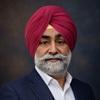
Gurpratap Singh Mann, Former member, Punjab Public Service Commission
gpsmann@substack.com
Disclaimer : The opinions expressed within this article are the personal opinions of the writer/author. The facts and opinions appearing in the article do not reflect the views of Babushahi.com or Tirchhi Nazar Media. Babushahi.com or Tirchhi Nazar Media does not assume any responsibility or liability for the same.