Punjab Gets Bamboo Push: Centre backs 857-acre project to break paddy-wheat cycle
Babushahi Bureau
Chandigarh, August 21, 2026: Punjab’s search for alternatives to the traditional paddy-wheat cropping cycle is set to get a fresh push, with the Central Government approving ₹2.49 crore under the National Bamboo Mission for the state.
The funding will support a government demonstration project for bamboo cultivation across more than 857 acres, aimed at encouraging farmers to explore alternative crops and diversify their agricultural income.
The initiative is being seen as an effort to move Punjab’s agriculture beyond its long-standing dependence on paddy and wheat and towards crops with emerging market and industrial potential.
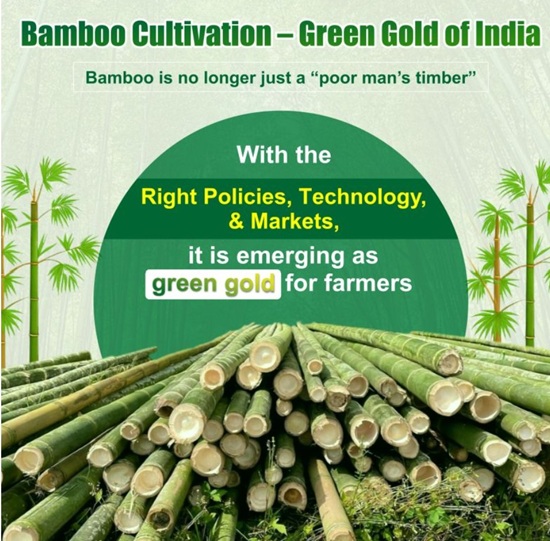
From paddy-wheat to bamboo: A new option for farmers
Bamboo cultivation is being promoted not merely as an alternative crop, but as a potential link between farming and a wider range of industries. Bamboo is used in sectors including paper and pulp, textiles, handicrafts and other value-added products, creating possibilities for farmers to connect with markets beyond the traditional grain economy.
The demonstration project will allow the suitability and potential of bamboo cultivation to be assessed on a larger scale in Punjab’s soil and climatic conditions. If the crop performs well, it could encourage more farmers to consider bamboo as part of their diversification strategy.
Punjab’s agricultural economy has remained heavily dependent on the paddy-wheat cycle for decades. While the system has played a major role in food production, the need for crop diversification and alternative income opportunities has increasingly become a policy priority.
The Centre’s bamboo initiative is therefore being viewed as another attempt to provide farmers with options beyond traditional crops.
For farmers, the potential advantage lies not only in growing a different crop but also in accessing new markets and industries. A successful bamboo value chain could create opportunities across cultivation, processing, handicrafts and other downstream activities.
The Centre’s focus on bamboo reflects a broader approach towards encouraging crops that have uses beyond direct food consumption and can potentially generate value through processing and industrial demand.
The ₹2.49-crore allocation and 857-plus-acre demonstration plantation are intended to provide a practical foundation for testing this model in Punjab.
However, the long-term success of bamboo farming will depend on factors such as crop suitability, assured markets, processing infrastructure, prices and farmers’ willingness to shift from established crops.
If the demonstration project proves successful, bamboo could emerge as another viable income option for Punjab’s farmers and contribute to reducing dependence on the paddy-wheat cycle.