Biraaj Dodiya’s DOOM ORGAN: Where memory, violence, and silence collide....by Sukant Deepak
At the latest edition of the Kochi-Muziris Biennale (KMB), one of Asia’s biggest art events, Mumbai-based artist Biraaj Dodiya’s installation ‘DOOM ORGAN’ unfolds as a charged, unsettling meditation on how contemporary life processes violence, loss, and remembrance.
Situated at the intersection of painting, sculpture, and photographic image-making, the work resists easy categorisation; instead, it draws the viewer into a fictionalised yet deeply recognisable landscape of the present.
Dodiya constructs DOOM ORGAN through an assemblage of painted steel sculptures, intimate linen paintings, and photographs.

The installation oscillates between two contrasting atmospheres: the heightened drama of a sports arena and the hushed stillness of a mortuary. This tension, between spectacle and silence, becomes the conceptual spine of the work, mirroring the dualities that shape our current moment.
Anchoring the space are painted metal forms that allude to medical stretchers and autopsy tables, their cold geometries evoking both care and finality. Interspersed among them are solitary basketball posts, symbols of competition, triumph, and defeat.
Together, these elements suggest bodies that are carried, held, measured, and ultimately erased, raising questions about who is seen, who is remembered, and who disappears without trace.
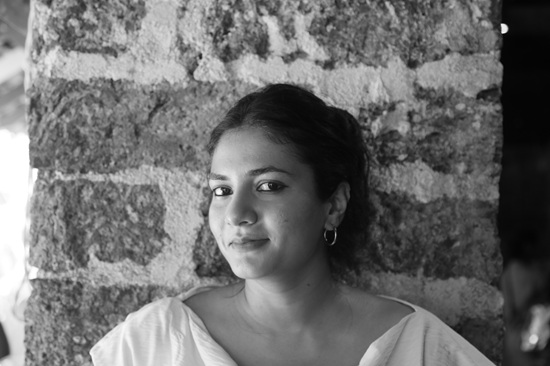
As Dodiya explains, the work began with a historical rupture: “Reading about the 1341 Kerala deluge was an important beginning point for the project because I started thinking about the collapse of Muziris and the emergence of Kochi, the cycle of life and death and how opposing forces charge our reality. The medical stretcher and basketball backboards, two opposing motifs that evoke very different relationships to our physicality, anchor the installation. Together they make a fictional space, one symbolizing stillness and loss, the other winning, movement, power.”
The accompanying paintings and photographs hover ambiguously between body and landscape. Earthy pigments accumulate, crack, and erode, bearing visible marks of their own making and unmaking. These surfaces feel excavated rather than composed, as though the images are being unearthed from beneath layers of time and trauma. References to burial and archaeology recur, reinforcing the sense that memory here is fragile, incomplete, and perpetually at risk of being overwritten.
Dodiya draws deeply from Kochi’s layered geography and history, the long horizon of the ocean, the textured walls of the Kappiri (Black African) shrine, and the violent floods that have shaped Muziris and the city that followed. The shrine, in particular, holds a charged resonance for the artist.
“The Kappiri shrine, its history of violence, and ultimately the idea that spirits surround us, they are in the walls and in the trees, they guide us, we don’t forget them, resonated with me. The way the surfaces of my work are painted, as if there are buried histories there, voices that stay with us, despite the speed at which we are now consuming images of death and violence in our current moment,” she says.
These local references are entwined with a more global visual language: the endless circulation of bruised and broken bodies across phone screens, consumed and discarded in the relentless churn of digital media.
The “doom organ” of the title emerges as a poetic and haunting metaphor, an ancient, imagined instrument that absorbs and releases collective grief. It remembers names, faces, and silenced voices, refusing the amnesia encouraged by spectacle and speed. The installation asks difficult questions: What does it mean to win or lose? How do we go on? And what responsibility do we bear as witnesses?
DOOM ORGAN offers no resolution. “Elocution over absent bodies is evidence,” the work seems to insist. Speech, gesture, and art become acts of resistance against erasure. The doom organ beats on as a reminder that memory, however fractured, still demands to be heard.
December 29, 2025
-

-
Sukant Deepak, Culture writer Co-founder: Elsewhere Foundation
sukant.deepak@gmail.com
Disclaimer : The opinions expressed within this article are the personal opinions of the writer/author. The facts and opinions appearing in the article do not reflect the views of Babushahi.com or Tirchhi Nazar Media. Babushahi.com or Tirchhi Nazar Media does not assume any responsibility or liability for the same.