Punjab Stubble Burning: Has farmers’ plight become a political battleground?……by Gurpreet ‘Lahori’
Every October and November, air pollution returns to the centre of public debate across North India, particularly in the national capital, Delhi.
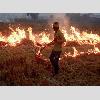
As air quality deteriorates, Punjab’s farmers once again find themselves under scrutiny over stubble burning. This raises an important question: why are farmers in Punjab so often singled out for Delhi’s pollution, while other contributing factors and neighbouring states receive comparatively less attention in the political debate?
Whenever a blanket of smog settles over Delhi, political exchanges intensify, with Punjab frequently becoming a focal point of criticism. Does stubble burning not occur in neighbouring Haryana and Uttar Pradesh, or is the issue being viewed selectively for political convenience?
The Bharatiya Janata Party (BJP) has repeatedly targeted Punjab’s farmers over stubble burning. Claims made by BJP leader and Delhi minister Manjinder Singh Sirsa regarding stubble-burning figures in Punjab have also become part of this political dispute. Critics argue that such claims should be assessed against verified data rather than political rhetoric.
Farmer leaders contend that stubble burning in BJP-ruled Haryana and Uttar Pradesh also deserves equal scrutiny. Farmers in these states, too, face practical and financial constraints in managing crop residue. They argue that blaming Punjab alone obscures the wider agricultural and environmental challenges that require coordinated action across state boundaries.
Meanwhile, the Aam Aadmi Party (AAP) government in Punjab has claimed that stubble-burning incidents in the state have declined by as much as 80 per cent this year. According to the state government, awareness campaigns and the availability of machinery to manage crop residue have helped reduce the number of incidents. The claim, however, needs to be considered alongside official monitoring data for the relevant period.
The political positions surrounding the issue have also changed over time. When Arvind Kejriwal led the government in Delhi and the Congress was in power in Punjab, Kejriwal frequently held press conferences blaming smoke from Punjab for Delhi’s pollution. Now, with the AAP governing Punjab, critics argue that the party’s approach to the issue has changed.
This shift has fuelled allegations that stubble burning is often used as a political weapon rather than addressed consistently as a public health and agricultural challenge. The question is whether political parties are equally willing to scrutinise their own governments and acknowledge the multiple sources contributing to poor air quality.
There is no denying that air pollution poses a serious threat to public health. Children, older people and those with respiratory conditions are particularly vulnerable to polluted air. However, holding farmers solely responsible for the pollution crisis oversimplifies a complex problem.
Industrial emissions, vehicle exhaust, construction dust, road dust and poorly managed waste also contribute to deteriorating air quality. Their relative contribution varies by location, weather conditions and time of year. A meaningful response therefore requires comprehensive action on all major sources, alongside measures to reduce agricultural residue burning.
Successive governments led by the BJP, AAP, Congress and Shiromani Akali Dal have all faced questions about the support extended to farmers. During election campaigns, political parties make promises to improve farmers’ lives. Yet, when it comes to providing affordable residue-management machinery, financial assistance and practical alternatives to burning, farmers often say the support available does not adequately address their needs.
For many farmers, burning stubble is not necessarily a preferred choice but a response to the limited time between harvesting paddy and sowing the next crop. Managing residue mechanically requires access to suitable equipment, labour, fuel and money. Without timely and affordable alternatives, compliance becomes difficult, particularly for farmers operating on tight margins.
Instead of ensuring that farmers have the resources to manage crop residue, authorities have also relied on enforcement measures, including police cases, adverse revenue-record entries and financial penalties. Such measures may be intended to discourage burning, but their effectiveness is limited if practical alternatives remain inaccessible or unaffordable.
Farmers need more than warnings and punitive action. They need a system that makes sustainable residue management financially viable and operationally convenient.
One possible approach is to provide adequate per-acre financial assistance to farmers who adopt approved residue-management practices. Governments could also expand access to machinery through subsidies, cooperative arrangements and local custom-hiring centres, allowing small farmers to use equipment without having to purchase it outright.
At the same time, crop-residue collection, transportation and utilisation need stronger support. Linking farmers with industries that use agricultural residue as a raw material could create additional incentives to avoid burning.
Such measures would require coordination among state governments, the Centre, agricultural institutions and private-sector stakeholders.
The responsibility cannot rest with Punjab alone. Delhi’s pollution crisis crosses state boundaries, making cooperation among Punjab, Haryana, Uttar Pradesh and the national capital essential. Governments must rely on transparent data, consistent enforcement and a shared plan that addresses agricultural burning as well as transport, industry, dust and waste.
Ultimately, the question is not whether Punjab’s farmers should be held accountable for stubble burning. It is whether governments are prepared to offer them workable alternatives while taking equal responsibility for the other sources of air pollution.
Clean air is a public necessity, and farmers’ livelihoods deserve protection. Treating these objectives as opposing interests will not solve the crisis. What is needed is sustained policy, adequate financial support and coordinated action that puts public health and practical solutions ahead of political point-scoring.
October 24, 2026.
-
-
Gurpreet ‘Lahori’, Senior Sub-Editor, journalist and Writer with Babushahi Network.
gurpreetsinghjossan@gmail.com
Disclaimer : The opinions expressed within this article are the personal opinions of the writer/author. The facts and opinions appearing in the article do not reflect the views of Babushahi.com or Tirchhi Nazar Media. Babushahi.com or Tirchhi Nazar Media does not assume any responsibility or liability for the same.